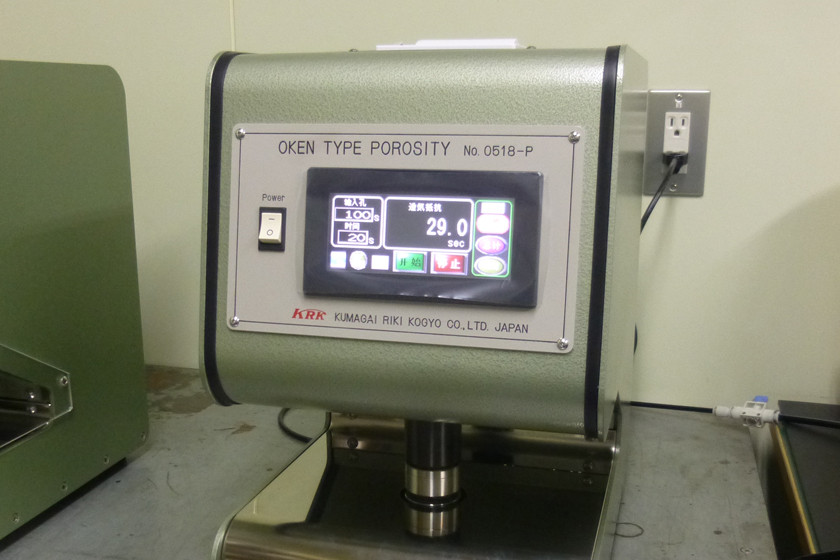
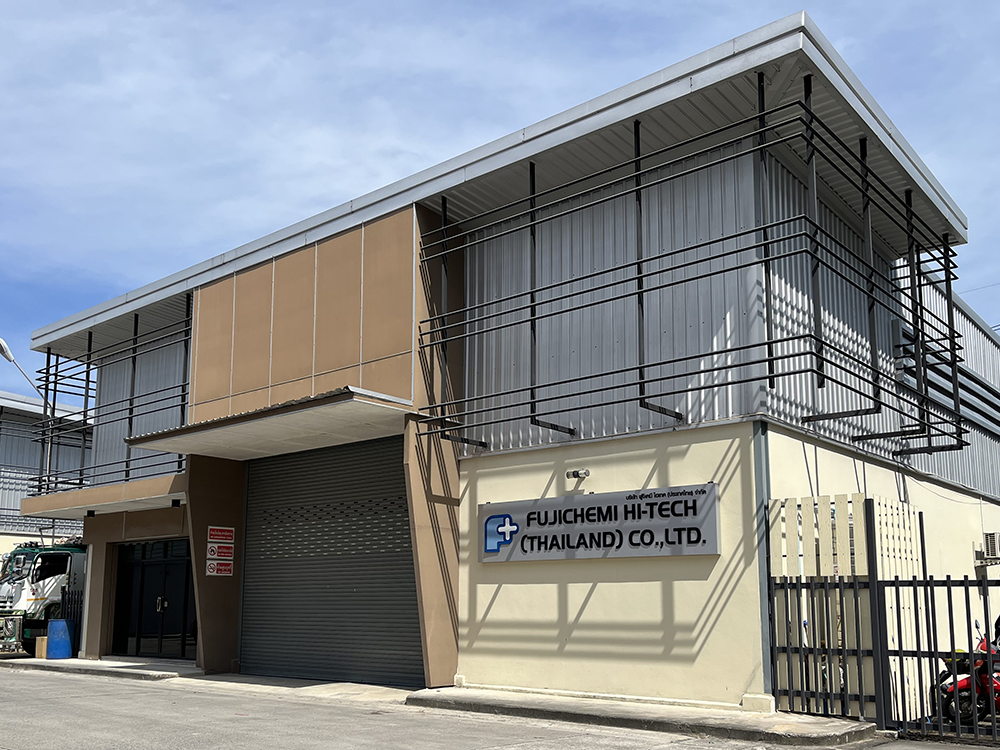
リチウムイオン電池セパレーターフィルムの透気度測定速度と正確さを、当社が王研式透気度測定機の導入で改善。中国拠点と海外代理店の連携で、現地ライン直結の品質管理効率化を実現した事例。 Accelerating LIB Separator Air Permeability Measurement | Improving Quality Control Efficiency Through Coordination Across Oken-Type Air Permeability Testers × China Bases・Overseas Distributors | フジケミ・トレーディング株式会社

2026.06.03

Accelerating LIB Separator Air Permeability Measurement | Improving Quality Control Efficiency Through Coordination Across Oken-Type Air Permeability Testers × China Bases・Overseas Distributors

For customers whose LIB separator film air permeability measurement was bottlenecking line capacity, we proposed the Oken-type air permeability tester. Through coordination between our Shanghai base and overseas distributors, we provided everything from equipment installation to local maintenance and calibration on a one-stop basis, significantly improving quality control efficiency.

The “Air Permeability Measurement Bottleneck” Issue Occurring at LIB Separator Production Sites

Regarding LIB separator film air permeability measurement, there is a desire to simultaneously improve measurement speed and accuracy. In existing lines, quality control is a bottleneck.
With existing testing machines, the measurement time is long, making total lot control difficult.
●Contexts of Manifestation: Existing product improvement phase. Sophistication of quality control at China production bases.
●Main Impacts: Line capacity reduction, increased inspection costs, impacts on lead times and supply stability.

Why Measurement Speed Fails to Increase: Processing Speed of Existing Testing Machines and Inspection Demands at the Site

Processing constraints (processing speed of existing testing machines).
●Specific Rationale: Evaluation and comparison of existing testing equipment.

Countermeasures Attempted Thus Far and Their Limitations

Increasing the frequency of sampling inspections (occurrence of oversights), reducing line speed (deterioration of productivity).
Based on these limitations, the following approach was adopted as a more drastic solution.

Solution Approach: Installation of Oken-Type Air Permeability Testers × Coordination Across Overseas Distributors × Shanghai Base Installation Support

STEP. 01

Equipment Installation Proposal

Selection of the Oken-Type Air Permeability Tester

STEP. 02

Coordination with Overseas Distributors

Arranging including local maintenance and calibration

STEP. 03

Local Coordination

Installation support at our Shanghai Base

Fujichemi Trading’s Supply Framework: Shanghai Base × Overseas Distributors × Partner Manufacturers

This solution is established through the division of roles among multiple bases.
・Shanghai Base: Local customer contact・accompanying the installation
・Overseas Distributors: Equipment arrangement・calibration・maintenance
・Partner Manufacturer (Kumagai Riki Kogyo Co., Ltd.): Equipment supply・technical data
●Supply Framework: Local installation support + maintenance and calibration network.

Results from Installation

In addition to improving functions and performance, cost reduction was also achieved. Realized improvements in measurement speed and quality control efficiency.
●KPI Candidates: Measurement time reduction / inspection throughput improvement / inspection cost reduction.
●Implementation Lead Time: Iterative evaluation → gradual implementation.

Expected Ripple Effects and Horizontal Rollout

The installation effects of this solution are not limited to solving the primary issue. Please also utilize this as material for internal proposals and proposals to management.
・Rollout to air permeability measurement of high-functional films other than separators (electrolytic capacitors・fuel cells)
・Evolution into a “Battery Evaluation Lab” where Fujichemi comprehensively proposes evaluation equipment for all LIB processes (electrodes・separators・assembly)
・Global horizontal rollout to EV・storage battery, and separator film factories in China・Korea・Southeast Asia, Europe and the Americas, etc.
・Differentiation of the “Local Maintenance Network” rippling out to other evaluation machines

Differences from Competitors: Why Fujichemi Trading is Chosen

In the import and sales of standalone equipment, local maintenance is a weak point. Fujichemi covers everything up to post-installation support through our “China Base + Overseas Distributors.”

Product Information and Spec Overview

The main specifications of our products with a proven track record can be selected from multiple grades depending on the application and required conditions. Typical specifications are as follows (please contact us for detailed specifications).

ItemContent
Primary ApplicationAir permeability measurement of LIB separator films (Quality Control)
Measurement MethodOken-type
Main Measurement TargetsLIB separator sheets/films, paper, non-woven fabric, high-functional films
FeaturesSignificant throughput improvement compared to conventional methods
Coordinating BasesEstablished a maintenance and calibration network via our Shanghai Base + overseas distributors
Related MarketsEV/storage batteries, separator film factories (China, Korea, Southeast Asia, Europe and the Americas)

Utilization Methods and Operational Examples

For actual operations, patterns such as the following are frequently adopted.
・Evaluation Phase: Requirement hearing → sample evaluation → finalizing specifications
・Pre-Mass Production Preparation: Cross-base division of roles, specification unification・local startup
・Mass Production Phase: Ensuring short lead times and stable supply through our supply framework
・Horizontal Rollout: Supporting horizontal rollout to other bases and other projects

FAQ (Frequently Asked Questions)

Can it be used to measure films other than separators?

It is also applicable to the air permeability of high-functional films and electrolytic capacitors.

Can the maintenance network be used in regions other than China?

We are currently expanding our partnerships with overseas distributors, so applicable areas are open to consultation.

It can be introduced as a set with other LIB evaluation equipment.

Regarding evaluation equipment for all LIB processes, we can provide comprehensive proposals under our “Battery Evaluation Lab.”

Are support materials available in English and Chinese?

Materials supported in English and Chinese, as well as local support, can be provided.

Is evaluation using a demonstration machine possible?

It is possible depending on the project. We welcome consultations regarding demonstration machines and paid testing.

Proposals by Related Applications and Issues

■High-Quality Punching of LIB/Solid-State Battery Electrodes | Eliminating Burrs and Cracks with Nogami Giken Hand Punches
■Stable Supply and Quality Improvement of Fluoropolymer Films (FEP/PFA) | Providing Multiple Samples with Short Lead Times via In-House Slitting
■BCP Multi-Sourcing of Ferrite Cores for Cable Noise Elimination | Equivalent Quality × Stable Supply × Cost Reduction

For consultations regarding our products and services,please feel free to contact us here.

Inquire about this product
この用途・課題別の提案を書いた人

この用途・課題別の提案を書いた人

Fujichemi Trading Co., Ltd. Sales Department III

Industry: Lithium-ion Battery Material Manufacturer (Separator) | Bases: China (Overseas Distributor Partnership) (Shanghai Base / Overseas Distributors / Partner Manufacturers) | Related Products: Oken-type Air Permeability Tester, LIB Material-related Evaluation Equipment

Solutions by Application and Challenge in the Same Category

CASE

Joint Development of Low-Contamination Release Liners (Zero Adhesive Residue) | Balancing Functionality and Quality through Optimized Blending of Adhesives and Curing Agents

Release liners that suffer from poor compatibility with adhesives, leading to adhesive residue after peeling—we break through this physical property limit by optimizing the blend of adhesives and curing agents, combined with partnership with our partner manufacturers. Through a joint development scheme built on repeated prototyping and evaluation, we have simultaneously achieved enhanced functionality/performance and consistent quality. The Barrier of "Low-Contamination Requirements" Standing in the Way of New Product Tape Development Seeking to develop a release liner with zero adhesive residue for a new tape product, as existing products fail to meet low-contamination requirements.Poor compatibility with the adhesive results in trace amounts of residue remaining after peeling.●Situations where the issue manifests: New product development phase.●Primary impacts: Adhesion failures, peeling failures, and competitive pressure to switch to alternative suppliers' products. Why Zero Adhesive Residue Cannot Be Achieved: Poor Interfacial Compatibility Between the Adhesive and the Release Layer Physical property limits of existing liner materials. Poor compatibility at the interface between the adhesive and the release layer.●Basis for Identification: Product research and prototype evaluations. Countermeasures Attempted So Far and Their Limitations Changing the types of existing liners (only limited improvement), or adjusting the peeling force alone (contamination issue remained unresolved).Based on these limitations, we adopted the following approach as a more fundamental and drastic countermeasure. Solution Approach: Optimizing Adhesives & Curing Agents Blending × Joint Development Scheme Jointly optimizing the blending of adhesives and curing agents with the customer by proposing new materials + changing existing grades. STEP. 01 Material Proposal Proposing multiple release layer and adhesive candidates for low-contamination applications STEP. 02 Blending Optimization Reducing post-peeling contamination by modifying the curing agent ratio STEP. 03 Iterative Prototyping & Evaluation Conducting repeated evaluations on-site in collaboration with partner manufacturers Fujichemi Trading's Service Delivery Network: Head Office × Partner Manufacturers × Customers (Adhesive Evaluation) This solution is established through a clear division of roles across multiple locations.・Head Office / Domestic Sales: Project window (point of contact)・Partner Manufacturers: Supply of release layers, adhesives, and curing agents, along with technical expertise・Customer (Tape Manufacturer): Evaluation on the adhesive side●Supply System: Joint development scheme, supporting small-lot supply during the development phase. Results achieved through implementation Achieved enhanced functionality/performance, consistent quality, and a reduced defect rate.●KPI Candidates: Improvement in contamination test pass rates / Improvement in customer-side yield.●Implementation Lead Time: Mid-to-long term development project with repeated prototyping and evaluation. Anticipated Ripple Effects and Horizontal Expansion The implementation effects of this solution go beyond solving the primary issue. Please also leverage this as material for internal and executive-level proposals.・Commercializing the "combination proposal" of release layer × adhesive layer × curing agent・Establishing a strong presence as a bridge between adhesive manufacturers and film manufacturers Differences from Competitors: Why Fujichemi Trading is Chosen Adhesive manufacturers alone often find it difficult to commit deeply to the release layer side. As a trading company capable of cross-functionally handling "release layers × adhesives × curing agents," Fujichemi can fulfill the role of a collaborative hub. Product Information & Spec Overview The main specifications of our proven products can be selected from multiple grades depending on your application and requirements. The representative specifications are as follows (please contact us for detailed specifications). ItemSpecificationsPrimary ApplicationRelease liners for tapes and adhesive filmsDesign AxisInterfacial compatibility between release layer and adhesive / Curing agent ratioCollaboration FormatJoint development scheme (iterative prototyping & evaluation)SupplySupports small-lot supply during the development phaseRelated FieldsLow-contamination requirement tapes for electronic and optical fieldsEvaluation ItemsContamination test / Peeling force Application Methods & Operational Examples The following patterns are commonly adopted in actual operations.・Evaluation Phase: Requirement hearing → Sample evaluation → Specification finalization・Pre-Mass Production Preparation: Role division across multiple cross-functional locations・Mass Production Phase: Ensuring stable supply through our established supply system・Horizontal Expansion: Supporting horizontal expansion to other locations and projects FAQ (Frequently Asked Questions) What kind of system/framework will be used to proceed with joint development? Our company will act as the single point of contact, connecting partner manufacturers handling release layers, adhesives, and curing agents with the customer's evaluation team. How long is the prototyping period? It depends on the project, but because it requires repeated blending and evaluation, it tends to become a mid-to-long term project. Can we conclude an NDA (Non-Disclosure Agreement)? Of course. We can execute an NDA at the initial stage of development. Proposals by Related Applications and Specific Challenges ■Small-Lot & Slitting of FPC Release Film | Supplying Evaluation Samples with Short Lead Times from In-Stock Items■Stable Supply and High Quality of Fluoropolymer Film (FEP/PFA) | Providing Multiple Samples with Short Lead Times via In-House Slittin

共同開発

品質向上 x 歩留まり改善

塗料用樹脂・接着剤

離型フィルム

高機能材料 x 新規開発

Temperature-Dependent Sheet HUMOFIT® | Reducing the Feeling of Pressure with F+BAND, a Fixation Band for Medical and Sports Applications

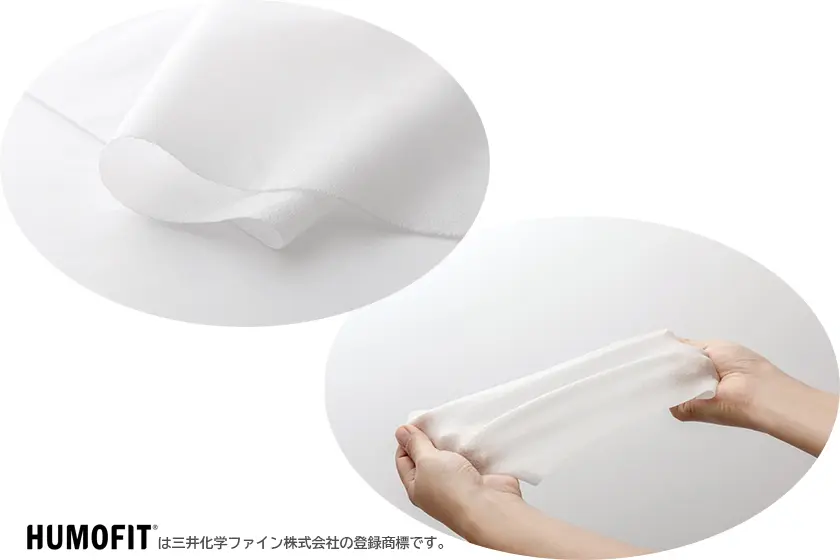
Balancing "rigidity at room temperature" and "flexibility at body temperature," which is difficult with conventional fixation materials—with F+BAND applying the temperature-dependent sheet HUMOFIT®, we have simultaneously achieved reduced tightness when worn and ensured breathability. This solution also looks toward horizontal expansion into the medical, sports, beauty, and wearable device fields. The Issue of "Tightness from Fixation Bands" Occurring in Medical and Sports Fields In medical and sports applications, there was a demand for a material that "fits the body without a feeling of pressure" as an alternative to fixation bands and bandages for arms. With existing materials, it is difficult to balance moldability and a snug fit.It was necessary to switch between hardness and softness depending on the situation, which was difficult to address with conventional fixation agents and tapes.● Scenarios where this becomes apparent: Improvement of existing products. Needs became apparent in situations such as exhibitions.● Main impacts: Discomfort when worn → lower continuous use rate, deterioration of workability in medical fields, and difficulty in differentiation from competitors. Why Existing Materials Do Not Fit: Physical Properties That Cannot Balance Room Temperature and Body Temperature The physical property limitations of existing fixation materials (plastics and rubber). They cannot balance rigidity at room temperature with flexibility at body temperature.● Grounds for identification: Interviews with existing clients and at exhibition booth displays. Countermeasures Attempted So Far and Their Limits Elastic rubber bands (feeling of tightness remains) and cast-type materials (heavy and difficult to handle).Based on these limitations, we adopted the following approach as a more fundamental solution. Solution Approach: HUMOFIT® Application × Die-Cut Shape Optimization × Perforating Process to Ensure Breathability Applying and developing the temperature-dependent sheet HUMOFIT®. Optimizing breathability and fit through material grade changes combined with die-cut shapes and perforating processes. STEP. 01 Material Grade Change Re-selecting the HUMOFIT® temperature-dependent sheet for medical applications STEP. 02 Die-Cut Shape and Size Adjustment Repeating evaluations with fixation band shapes STEP. 03 Perforating Process Ensuring breathability and suppressing stuffiness Fuji Chemi Trading's Supply System: Headquarters × Partner Manufacturers This solution is established through the division of roles among multiple bases:・Headquarters / Domestic Sales: Customer window and exhibition collaboration・Partner Manufacturers: Supply and physical property data of the HUMOFIT® sheet● Supply System: Prototyping response with multiple variations of shapes and sizes. Results of Implementation Achieved function and performance improvements. Tightness when worn has been reduced, improving the feeling of use in medical and sports fields.● KPI Candidates: Improvement in sensory evaluation of tightness / Extension of wearing time / Reduction of rashes and stuffiness at the wearing site.● Implementation Lead Time: Commercialized by repeating prototype evaluations of shapes and perforation layouts. Anticipated Ripple Effects and Horizontal Expansion The benefits of implementing this solution extend beyond solving the primary issues. Please utilize this as material for internal and management proposals.・Horizontal expansion into prosthetic devices, supporters, and bands for pets・HUMOFIT application into helmet linings, sports protectors, etc.・Development into beauty and wearable devices (such as sensors that adhere tightly using body temperature)・The message "Deforms with body temperature" has excellent compatibility with technical and health media Differences from Competitors: Why Fuji Chemi Trading is Chosen Trading companies dealing only in single rubber or resin items have thin application know-how for temperature-dependent materials. Fuji Chemi can propose "HUMOFIT material × cutting shape optimization × perforated breathability design" as a package proposal. Product Information & Specification Overview The main specifications of products with a proven track record can be selected from multiple grades depending on the application and required conditions. Representative specifications are as follows (please contact us for detailed specs). Specification (Brand)Specification (Brand)Thickness (mm)TypeProduct Width (mm)Product Length (mm)RemarksWhite Band0.35S (Standard) / H (Perforated)10–20050–800Material: OlefinTransparent Band (A11)0.4S (Standard) / H (Perforated)Same as aboveSame as aboveSame as above Utilization Methods and Operation Examples In actual operations, the following patterns are frequently adopted:・Evaluation Phase: Requirement hearing → Sample evaluation → Specification finalization・Pre-Mass Production Preparation: Division of roles across bases, specification standardization, and local startup・Mass Production Phase: Ensuring short delivery times and stable supply through our supply system・Horizontal Expansion: Supporting expansion into other bases and projects FAQ (Frequently Asked Questions) Is it possible to apply this to other medical devices and sports equipment? Horizontal expansion into prosthetic devices, supporters, sports protectors, etc., is possible. Can you also propose this for the beauty and wearable device fields? Application to beauty equipment, wearable sensors, and other purposes that tightly adhere using body temperature is possible. How do you ensure breathability? Breathability is ensured through perforating processes (H type). The size and layout of the holes can also be customized. Can the die-cut shape be customized? We can accommodate customization of die-cut shapes, sizes, and perforation layouts. Is it possible to request samples? We can accommodate sample supply. Please let us know your requirements. Proposals by Related Applications and Challenges ■ 100% Eco-Friendly Water-Absorbing + Deodorizing Bag (F+BAG ACE) | Entering General Goods and Disaster Prevention Markets with Biodegradable Non-Woven Fabric × Naturally Derived Water-Absorbing Polymer■ Local Procurement of Static Electricity Measures for OA Equipment in Vietnam | Selecting Static Elimination Brushes and Conductive Fibers Aligned with Manufacturer Design Philosophies■ Joint Development of Low-Contamination Release Separators (Zero Adhesive Residue) | Balancing Function and Quality Through Optimal Blending of Adhesives × Curing Agents

品質向上 x 歩留まり改善

固定バンドF+BAND

抜き加工・有孔加工

温度依存性シート HUMOFIT®

自社開発オリジナル製品

高機能材料 x 新規開発

Thermal Barrier Paint Solution to Reduce Factory Electricity Bills in Thailand | Arranging Local Application Partners | Collaboration Across 3 Bases: China, Thailand, and Vietnam

In the Thai manufacturing industry, continuous increases in electricity rates and prolonged dry seasons have caused factory electricity bills—primarily for air conditioning—to squeeze profits. Focusing on the application of thermal barrier paint to roofs, we provide one-stop support ranging from electricity bill reduction simulations to the arrangement of local application partners and localized currency quoting. As a realistic solution to lower running costs with low investment and short construction periods, this has already been adopted by multiple Japanese factories. Soaring Electricity Bills in Thailand: What Was Happening Inside the Factories? Electricity rates in Thailand have undergone repeated increases due to fuel cost adjustments, making the pressure on production costs a chronic issue. Especially in factories with large roof areas, coupled with the prolonged high temperatures of the dry season, air conditioning systems run at full capacity constantly, inflating annual electricity bills to a level that demands executive-level management decisions. On the other hand, upgrading power reception and transformation equipment or installing solar power presents high hurdles regarding initial investment, construction periods, and the shutdown of existing facilities, leaving many facilities unable to take action."We want to lower our electricity bills. We also want to deliver results in the context of SDGs and CO2 reduction. However, we cannot commit to capital expenditure on equipment."——We hear these exact concerns from numerous Japanese factories operating local subsidiaries. Why Aren't Electricity Bills Dropping? Radiant Heat from the Roof Keeps Air Conditioning Running Constantly The root cause revealed through on-site inspections and roof surface temperature measurements is a structural issue: the roof and exterior walls lack heat-insulating performance, allowing radiant heat to flow directly into the interior. In some cases, the roof surface temperature exceeds 70°C during the day, and this heat warms up the ceiling space and indoor air, meaning the air conditioning cannot keep up no matter how much it cools.Furthermore, factory buildings in Southeast Asia often have outdated insulation specifications, so upgrading air conditioning units alone rarely provides a fundamental solution—this is the main reason why many hesitate when considering upgrading existing facilities.The basis for identifying this cause comes from cross-referencing the following two points:・Reviewing current electricity bill data provided by the customer・Measuring roof surface temperatures and checking roofing materials during on-site inspectionsBy matching these two datasets, we can conclude with near certainty that "heat inflow from the roof is the dominant factor." Countermeasures Attempted Thus Far and Their Limitations Countermeasures already attempted by many factories share the following common limitations:・ Adjusting HVAC operating hours: The effect is limited, and the system still faces high loads during production hours.・ Considering heat-insulating film application on the roof: Frequently abandoned due to hurdles in cost and construction periods.・ Considering retrofitting insulation materials to existing equipment: Requires halting existing equipment during construction, resulting in too great an impact on production.Given these limitations, thermal barrier paint emerges as the realistic solution—a move that "reduces heat inflow from the roof without stopping existing operations." Solution Approach: Thermal Barrier Paint × Electricity Bill Simulation × Local Application Partners By focusing on top-coating existing roofs with thermal barrier paint and providing the following three components as a complete package, we lower the hurdle for customers to make the decision to "give it a try." STEP. 01 Sourcing Alternative Materials and Replacements We perform a matrix comparison of both Japanese and local manufacturer products based on required performance, roof material compatibility, and cost to select the optimal thermal barrier paint grade. Focusing primarily on products with a proven track record in Thailand, we also obtain evaluation data from cooperating manufacturers as needed. STEP. 02 Presentation of Electricity Bill Reduction Simulations Based on current electricity bill data, HVAC operating hours, roof area, and insulation specifications, we will estimate the post-application electricity bill reduction effects and the payback period. Visualizing the "numbers" necessary for management decisions significantly accelerates the internal approval speed. STEP. 03 Selection of Local Construction Partners and Quotations in Local Currency Leveraging our Thai base as a starting point, we select reliable local application partners and optimize pricing and lead times via local currency quoting. We also propose process designs that minimize the impact on your production, including night/weekend application and split-phase application block by block. FUJICHEMI TRADING's Support Framework: A Powerful Triad of Japan HQ, Thai Base, and Cooperating Manufacturers This solution is realized through a clear division of roles among three parties: Japan HQ (Sales/Technical), our Thai base, and cooperating manufacturers.・ HQ (Sales/Technical): Selects coatings / Prepares electricity bill reduction simulations / Supports decision-making for adopting companies・ Thai Base (Local Subsidiary): Conducts on-site inspections, selects application partners, and provides local currency quoting/contracting / Manages application and construction / Provides after-sales support・ Cooperating Manufacturers: Supplies thermal barrier paint / Assists in grade selection / Provides evaluation data● Supply Framework: Local inventory support and small-lot application are available. This enables a small-start introduction where you can first test the effects on a single building before rolling it out across subsequent buildings. Results of Adoption: Simultaneously Achieving Running Cost Reductions and Workplace Environment Improvements We have received the following qualitative and quantitative result reports from adopting companies:・ Reduction in factory running costs (electricity bills): Achieved a reduction (▲) in electricity bills based on actual customer data.・ Lower indoor and roof surface temperatures: Stabilized summer production efficiency due to improvements in perceived temperature.・ Visualization of the payback period: Increased the precision of management decisions, accelerating subsequent rollout evaluations.・ Rollout track record: Cases exist where introduction to a single building led to expansion across additional buildings and sister factories.● Introduction Lead Time: Rapid turnaround is possible from the initial consultation through estimation to test painting. Anticipated Ripple Effects and Rollouts: 3 Returns Beyond Just Electricity Bill Reductions The effects of adopting thermal barrier paint extend far beyond electricity bill reductions. Please utilize these cascading ripple effects triggered by "heat mitigation" as supporting material for your internal proposals.1. Workplace Environment Improvement → Lower Turnover Rates and Higher ProductivityBy mitigating the extreme heat directly beneath the roof, the workload on workers during hot seasons is reduced. As securing and retaining operators is a pressing management issue in Thai manufacturing sites, improving the workplace environment directly links to lower turnover rates and enhanced productivity.2. Contribution to SDGs and CO2 Reduction ReportsElectricity bill reductions can be directly quantified as carbon emission reductions, leading to immediate score improvements in CSR and supplier evaluations. In an era where global headquarters' procurement standards closely scrutinize "suppliers' CO2 reduction track records," leaving behind quantitative data holds great value.3. Extending the Service Life of Rooftop EquipmentLowering the roof surface temperature reduces thermal stress on outdoor HVAC units and solar panel peripheral equipment, which can be expected to extend equipment life. This creates a double benefit: electricity bill savings combined with delaying future equipment replacement costs.Furthermore, for customers who establish a proven track record of introduction in Thailand, we can also support the horizontal rollout of identical proposals to your factory bases in Vietnam and China. Differences from Competitors: Why Choose FUJICHEMI TRADING? Compared to competitors that only sell coating products (paint manufacturers' direct sales and local chemical trading companies), our unique strength lies in our ability to provide a seamless, end-to-end service encompassing "electricity bill simulations + local application partner arrangements + local currency settlement." Our network, which bridges Japanese-level quality and localized cost structures, is the reason we continue to be chosen.・Difference from Manufacturers' Direct SalesThey do not provide simulations or arrange application partners, requiring customers to handle these arrangements individually.・Difference from Local Paint DistributorsWe offer selection based on Japanese quality standards, along with technical support in Japanese and proposal materials tailored for executive-level management. Product Information & Specifications Overview The main specifications of our proven thermal barrier paints offer a choice of multiple grades depending on the application and roofing materials. Typical specifications are as follows (please contact us for detailed specifications). ItemSpecificationsApplication TypeSelectable from Water-based / Solvent-basedApplicable Roofing MaterialsMetal roofs (folded-plate, ribbed-seam, etc.) / Concrete roofs / Slate roofsStandard Film Thickness100–200 μm (Adjustable depending on application and roofing material)Reflective PerformanceHigh-reflection type can be selected for both visible light and near-infrared regionsWeather Resistance5–10 year class (Varies depending on the product)Application MethodRoller / Spraying (Selected based on on-site conditions)Service AreaAll over Thailand (Identical proposals are also available in Vietnam and China) How to Utilize & Operational Examples In actual operations, the following patterns are frequently adopted:・ Step-by-step introduction building by building: Apply to one building first for effect verification, then expand to additional buildings and sister factories after reviewing results.・ Scheduling before the hot season: To maximize the effect, it is ideal to complete the application before entering the dry season.・ Synchronization with existing facility maintenance: Co-execute with roof waterproofing renovations or HVAC upgrades to compress scaffolding costs and minimize weekend production impacts.・ Standardization across multiple bases: Led by HQ procurement, unify the thermal barrier paint specifications across multiple local factories. FAQ (Frequently Asked Questions) Are there any restrictions on the roofing materials? Our solutions support major roofing materials including metal, concrete, and slate roofs. Since the optimal grade varies depending on the material and shape, we will provide a proposal after an on-site inspection. What is the estimated payback period? It varies depending on the roof area, electricity cost rates, and HVAC operating hours. If you provide your current electricity bill data, we will run a simulation to calculate a specific payback period for you. Can the application be performed without stopping existing production? Yes. We will propose a process design that minimizes the impact on your production, including night application, weekend application, and split-phase application block by block. How can the effects be measured? Measurement is possible by comparing roof surface temperatures, indoor temperatures, and electricity bills. We also support you starting from the selection of representative measurement points. Is support available at overseas bases outside of Thailand? Yes, we can roll out identical solutions at our bases in Vietnam and China (Shanghai). For customers with multiple locations, we can also propose the standardization of specifications across all bases. Proposals by Related Application and Challenge ■ Factory Electricity Bill Reduction & Heat Mitigation | Developing Thermal Barrier & UV Cut Sheets with Custom Processing (Japan-ASEAN Collaboration)■ Reducing Production Line Stoppage Risks via Local Stock in Thailand for Automotive Parts | Supplying Molding Resins and Rubber through BCP Schemes

コストダウン

コストダウン × 海外拠点活用

タイ拠点

原価低減

塗料用樹脂

接着剤

施工パートナー

環境・省エネ対応

遮熱塗料

Electrical &
Electronic Materials

Inquiry form

If you have any comments, questions, or inquiries regarding our products and services, please use the form below.

This site is registered on wpml.org as a development site. Switch to a production site key to remove this banner.