Solutions by Use Case

CASE

Search by Category

Small-Lot & Slitting Services for FPC Release Films | Fast Delivery of Evaluation Samples from Stock

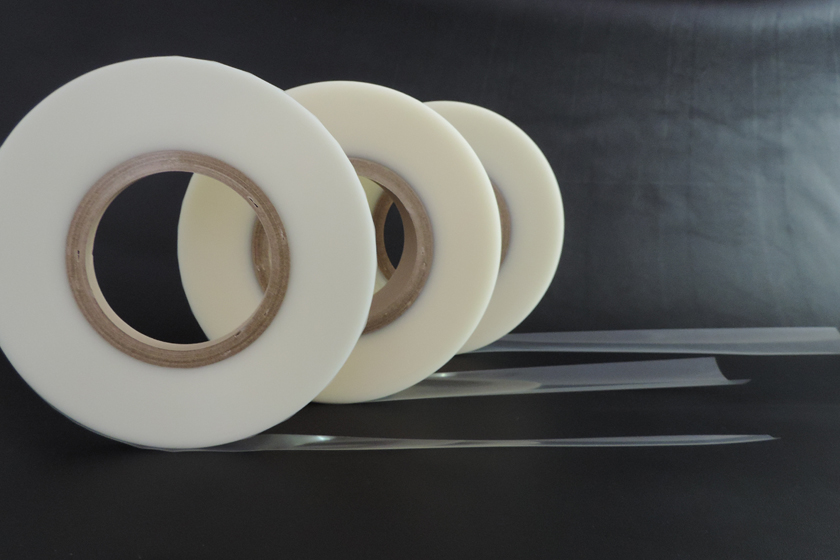
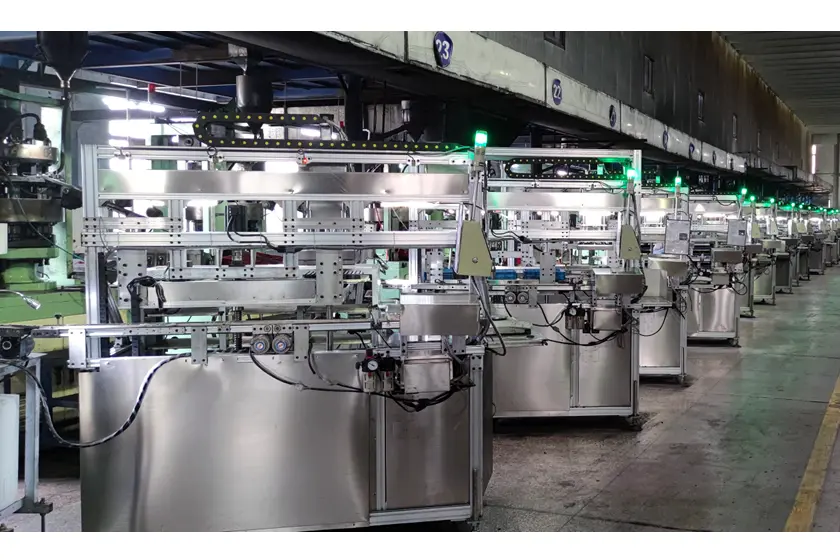
When developing or improving FPC products, finding release films for evaluation often poses a dilemma: standard production lots are too large, while products sourced from overseas e-commerce platforms suffer from unstable quality. By slitting materials directly from our master rolls in stock, we provide the exact sizes you need in small lots. Furthermore, through inventory coordination with our overseas locations, we support you seamlessly from the evaluation phase all the way to mass production. The "Shortage of Evaluation Films" Dilemma in New Product Development and Improvement Sites Engineers want to purchase a small quantity of release films for testing in new product development or current product improvement. However, standard production lots are too large, causing the evaluation process to come to a halt.Requirements are demanded across all aspects: functionality, quality, cost, lead time, environmental compliance, and processability.●When this occurs: New product development and existing product improvement phases.●Main impacts: Prolonged evaluation lead times, increased development costs, and lost business opportunities. Why Small Lots Aren't Available in the Market: The Barrier of Master Roll Units and Standard Lots Because master film rolls are massive and standard production lots are too large, switching to small-lot distribution was previously unsupported in the market.●Specific basis: Customer interviews. Countermeasures Attempted So Far and Their Limitations Purchasing standard production lots (resulting in excess inventory and disposal loss) or sourcing from overseas e-commerce (suffering from unstable quality).Recognizing these limitations, we have adopted the following approach as a more fundamental solution. Our Solution: Master Roll Slitting from Stock × Small Lots in Requested Sizes × Overseas Location Network Slitting from our master rolls in stock to sell small lots in your requested sizes. We also coordinate inventory with our overseas locations. STEP. 01 Proposal of New Materials Selecting a release film that meets the required physical properties STEP. 02 Processing to Customer-Requested Sizes Slitting at the Mito Processing Center STEP. 03 Overseas Location Network Processing and supply are also available at our locations in China, Thailand, and Vietnam as needed Fujichemi Trading's Supply System: Head Office × Mito Processing Center × Overseas Locations This solution is made possible through the collaboration of multiple locations, each with its own role.・Head Office / Domestic Sales: Customer Contact Window・Mito Processing Center: Slitting and Die-Cutting・Overseas Locations: Local Slitting and Inventory Management・Partner Manufacturers: Master Roll SupplySupply System: Processing directly from stock to ensure short lead times and small-lot shipments. Results of Implementation Improvement in functionality and performance, along with enhanced lead times and supply stability. The customer support system has also been strengthened through collaboration with overseas locations.●KPI Candidates: Reduction in evaluation lead time / Reduction in disposal loss / Improvement in development schedule compliance rate.●Implementation Lead Time: Immediate processing from stock. Expected Ripple Effects and Horizontal Expansion The effects of implementing this solution go beyond solving the primary issue. It can also be utilized as material for internal and management-level proposals.・Securing large-lot orders in the mass-production phase after adoption in FPC evaluation・Branding of "R&D Support" centered around small-lot and slitting services・Horizontal expansion to materials other than release films (protection films, functional films)・Attracting SEO traffic from other companies' R&D labs (targeting B2B engineers) Differences from Competitors: Why Choose Fujichemi Trading While most master roll film distributors focus primarily on standard lot sales, Fujichemi Trading seamlessly accompanies you from the evaluation phase to mass production through our unique combination of "Stock + In-House Processing + Overseas Network." Product Information & Specifications Overview The main specifications of our proven products can be selected from multiple grades depending on your application and requirement conditions. Typical specifications are as follows (please contact us for detailed specifications). ItemSpecificationPrimary ApplicationRelease film for Flexible Printed Circuits (FPC)Master RollFunctional film (Selected based on required physical properties)Processing ServicesSlitting and die-cutting to customer-specified sizesMinimum Order QuantitySmall-lot supply available from stockProcessing LocationsMito Processing Center / Overseas Locations (Thailand, Vietnam, China)Lead TimeShort lead-time shipment from stock Application Methods & Operational Examples In actual operations, the following patterns are most frequently adopted.・Evaluation Phase: Requirement Hearing → Sample Evaluation → Finalizing Specifications・Pre-Mass Production: Role sharing across locations, standardization of specs, and local launch・Mass Production Phase: Ensuring short lead times and stable supply through our reliable supply system・Horizontal Expansion: Supporting expansion to other locations and projects FAQ (Frequently Asked Questions) What is the minimum order quantity? We can accommodate small-lot requests from our existing stock. Please let us know your required size and quantity. Can we also request materials other than release films (such as protection films or functional films)? Yes, we welcome consultations for all types of functional films. Are samples provided free of charge? Sample terms depend on the specific project. Please let us know your requirements. Is processing and supply available at overseas locations as well? Processing and supply are also available at our locations in China, Thailand, and Vietnam. Is the transition to the mass-production phase smooth? We can accommodate mass production through the same point of contact and with the exact same specifications as the evaluation phase. Proposals by Related Application and Challenge ■ Anisotropic Conductive Film (ACF) × In-Country Slitting in Thailand: Achieving Space-Saving in Electronic Devices | Integrating Connection, Insulation, and Adhesion into a Single Sheet■ Ensuring Stable Supply and High Quality of Fluoropolymer Films (FEP/PFA) | Providing Multiple Samples with Short Lead Times via In-House Slitting

BCP x 安定供給

タイ拠点

ベトナム拠点

上海拠点

小ロット・スリット加工

離型フィルム(機能性フィルム)

高機能材料 x 新規開発

Thermal Barrier Paint Solution to Reduce Factory Electricity Bills in Thailand | Arranging Local Application Partners | Collaboration Across 3 Bases: China, Thailand, and Vietnam

In the Thai manufacturing industry, continuous increases in electricity rates and prolonged dry seasons have caused factory electricity bills—primarily for air conditioning—to squeeze profits. Focusing on the application of thermal barrier paint to roofs, we provide one-stop support ranging from electricity bill reduction simulations to the arrangement of local application partners and localized currency quoting. As a realistic solution to lower running costs with low investment and short construction periods, this has already been adopted by multiple Japanese factories. Soaring Electricity Bills in Thailand: What Was Happening Inside the Factories? Electricity rates in Thailand have undergone repeated increases due to fuel cost adjustments, making the pressure on production costs a chronic issue. Especially in factories with large roof areas, coupled with the prolonged high temperatures of the dry season, air conditioning systems run at full capacity constantly, inflating annual electricity bills to a level that demands executive-level management decisions. On the other hand, upgrading power reception and transformation equipment or installing solar power presents high hurdles regarding initial investment, construction periods, and the shutdown of existing facilities, leaving many facilities unable to take action."We want to lower our electricity bills. We also want to deliver results in the context of SDGs and CO2 reduction. However, we cannot commit to capital expenditure on equipment."——We hear these exact concerns from numerous Japanese factories operating local subsidiaries. Why Aren't Electricity Bills Dropping? Radiant Heat from the Roof Keeps Air Conditioning Running Constantly The root cause revealed through on-site inspections and roof surface temperature measurements is a structural issue: the roof and exterior walls lack heat-insulating performance, allowing radiant heat to flow directly into the interior. In some cases, the roof surface temperature exceeds 70°C during the day, and this heat warms up the ceiling space and indoor air, meaning the air conditioning cannot keep up no matter how much it cools.Furthermore, factory buildings in Southeast Asia often have outdated insulation specifications, so upgrading air conditioning units alone rarely provides a fundamental solution—this is the main reason why many hesitate when considering upgrading existing facilities.The basis for identifying this cause comes from cross-referencing the following two points:・Reviewing current electricity bill data provided by the customer・Measuring roof surface temperatures and checking roofing materials during on-site inspectionsBy matching these two datasets, we can conclude with near certainty that "heat inflow from the roof is the dominant factor." Countermeasures Attempted Thus Far and Their Limitations Countermeasures already attempted by many factories share the following common limitations:・ Adjusting HVAC operating hours: The effect is limited, and the system still faces high loads during production hours.・ Considering heat-insulating film application on the roof: Frequently abandoned due to hurdles in cost and construction periods.・ Considering retrofitting insulation materials to existing equipment: Requires halting existing equipment during construction, resulting in too great an impact on production.Given these limitations, thermal barrier paint emerges as the realistic solution—a move that "reduces heat inflow from the roof without stopping existing operations." Solution Approach: Thermal Barrier Paint × Electricity Bill Simulation × Local Application Partners By focusing on top-coating existing roofs with thermal barrier paint and providing the following three components as a complete package, we lower the hurdle for customers to make the decision to "give it a try." STEP. 01 Sourcing Alternative Materials and Replacements We perform a matrix comparison of both Japanese and local manufacturer products based on required performance, roof material compatibility, and cost to select the optimal thermal barrier paint grade. Focusing primarily on products with a proven track record in Thailand, we also obtain evaluation data from cooperating manufacturers as needed. STEP. 02 Presentation of Electricity Bill Reduction Simulations Based on current electricity bill data, HVAC operating hours, roof area, and insulation specifications, we will estimate the post-application electricity bill reduction effects and the payback period. Visualizing the "numbers" necessary for management decisions significantly accelerates the internal approval speed. STEP. 03 Selection of Local Construction Partners and Quotations in Local Currency Leveraging our Thai base as a starting point, we select reliable local application partners and optimize pricing and lead times via local currency quoting. We also propose process designs that minimize the impact on your production, including night/weekend application and split-phase application block by block. FUJICHEMI TRADING's Support Framework: A Powerful Triad of Japan HQ, Thai Base, and Cooperating Manufacturers This solution is realized through a clear division of roles among three parties: Japan HQ (Sales/Technical), our Thai base, and cooperating manufacturers.・ HQ (Sales/Technical): Selects coatings / Prepares electricity bill reduction simulations / Supports decision-making for adopting companies・ Thai Base (Local Subsidiary): Conducts on-site inspections, selects application partners, and provides local currency quoting/contracting / Manages application and construction / Provides after-sales support・ Cooperating Manufacturers: Supplies thermal barrier paint / Assists in grade selection / Provides evaluation data● Supply Framework: Local inventory support and small-lot application are available. This enables a small-start introduction where you can first test the effects on a single building before rolling it out across subsequent buildings. Results of Adoption: Simultaneously Achieving Running Cost Reductions and Workplace Environment Improvements We have received the following qualitative and quantitative result reports from adopting companies:・ Reduction in factory running costs (electricity bills): Achieved a reduction (▲) in electricity bills based on actual customer data.・ Lower indoor and roof surface temperatures: Stabilized summer production efficiency due to improvements in perceived temperature.・ Visualization of the payback period: Increased the precision of management decisions, accelerating subsequent rollout evaluations.・ Rollout track record: Cases exist where introduction to a single building led to expansion across additional buildings and sister factories.● Introduction Lead Time: Rapid turnaround is possible from the initial consultation through estimation to test painting. Anticipated Ripple Effects and Rollouts: 3 Returns Beyond Just Electricity Bill Reductions The effects of adopting thermal barrier paint extend far beyond electricity bill reductions. Please utilize these cascading ripple effects triggered by "heat mitigation" as supporting material for your internal proposals.1. Workplace Environment Improvement → Lower Turnover Rates and Higher ProductivityBy mitigating the extreme heat directly beneath the roof, the workload on workers during hot seasons is reduced. As securing and retaining operators is a pressing management issue in Thai manufacturing sites, improving the workplace environment directly links to lower turnover rates and enhanced productivity.2. Contribution to SDGs and CO2 Reduction ReportsElectricity bill reductions can be directly quantified as carbon emission reductions, leading to immediate score improvements in CSR and supplier evaluations. In an era where global headquarters' procurement standards closely scrutinize "suppliers' CO2 reduction track records," leaving behind quantitative data holds great value.3. Extending the Service Life of Rooftop EquipmentLowering the roof surface temperature reduces thermal stress on outdoor HVAC units and solar panel peripheral equipment, which can be expected to extend equipment life. This creates a double benefit: electricity bill savings combined with delaying future equipment replacement costs.Furthermore, for customers who establish a proven track record of introduction in Thailand, we can also support the horizontal rollout of identical proposals to your factory bases in Vietnam and China. Differences from Competitors: Why Choose FUJICHEMI TRADING? Compared to competitors that only sell coating products (paint manufacturers' direct sales and local chemical trading companies), our unique strength lies in our ability to provide a seamless, end-to-end service encompassing "electricity bill simulations + local application partner arrangements + local currency settlement." Our network, which bridges Japanese-level quality and localized cost structures, is the reason we continue to be chosen.・Difference from Manufacturers' Direct SalesThey do not provide simulations or arrange application partners, requiring customers to handle these arrangements individually.・Difference from Local Paint DistributorsWe offer selection based on Japanese quality standards, along with technical support in Japanese and proposal materials tailored for executive-level management. Product Information & Specifications Overview The main specifications of our proven thermal barrier paints offer a choice of multiple grades depending on the application and roofing materials. Typical specifications are as follows (please contact us for detailed specifications). ItemSpecificationsApplication TypeSelectable from Water-based / Solvent-basedApplicable Roofing MaterialsMetal roofs (folded-plate, ribbed-seam, etc.) / Concrete roofs / Slate roofsStandard Film Thickness100–200 μm (Adjustable depending on application and roofing material)Reflective PerformanceHigh-reflection type can be selected for both visible light and near-infrared regionsWeather Resistance5–10 year class (Varies depending on the product)Application MethodRoller / Spraying (Selected based on on-site conditions)Service AreaAll over Thailand (Identical proposals are also available in Vietnam and China) How to Utilize & Operational Examples In actual operations, the following patterns are frequently adopted:・ Step-by-step introduction building by building: Apply to one building first for effect verification, then expand to additional buildings and sister factories after reviewing results.・ Scheduling before the hot season: To maximize the effect, it is ideal to complete the application before entering the dry season.・ Synchronization with existing facility maintenance: Co-execute with roof waterproofing renovations or HVAC upgrades to compress scaffolding costs and minimize weekend production impacts.・ Standardization across multiple bases: Led by HQ procurement, unify the thermal barrier paint specifications across multiple local factories. FAQ (Frequently Asked Questions) Are there any restrictions on the roofing materials? Our solutions support major roofing materials including metal, concrete, and slate roofs. Since the optimal grade varies depending on the material and shape, we will provide a proposal after an on-site inspection. What is the estimated payback period? It varies depending on the roof area, electricity cost rates, and HVAC operating hours. If you provide your current electricity bill data, we will run a simulation to calculate a specific payback period for you. Can the application be performed without stopping existing production? Yes. We will propose a process design that minimizes the impact on your production, including night application, weekend application, and split-phase application block by block. How can the effects be measured? Measurement is possible by comparing roof surface temperatures, indoor temperatures, and electricity bills. We also support you starting from the selection of representative measurement points. Is support available at overseas bases outside of Thailand? Yes, we can roll out identical solutions at our bases in Vietnam and China (Shanghai). For customers with multiple locations, we can also propose the standardization of specifications across all bases. Proposals by Related Application and Challenge ■ Factory Electricity Bill Reduction & Heat Mitigation | Developing Thermal Barrier & UV Cut Sheets with Custom Processing (Japan-ASEAN Collaboration)■ Reducing Production Line Stoppage Risks via Local Stock in Thailand for Automotive Parts | Supplying Molding Resins and Rubber through BCP Schemes

コストダウン

コストダウン × 海外拠点活用

タイ拠点

原価低減

塗料用樹脂

接着剤

施工パートナー

環境・省エネ対応

遮熱塗料

Focused Development of High-Frequency Compatible FPC (Low-Dielectric Materials such as LCP) | On-Site Hearing-Based Proposals Utilizing Overseas Bases

The high-frequency FPC field is seeing growing requirements for physical properties due to the widespread adoption of 5G and next-generation communication devices. We provide a "demand-driven" solution that aggregates information on manufacturers' new and developmental products, and matches them with needs through on-site hearings at local factories via our overseas bases. Mismatches Between Required Properties and Supply Frequently Occurring in the High-Frequency FPC Market While market requirements in the electronic components and equipment industry are updated daily and demands for high-frequency compatible FPCs (such as LCP) are rising, projects tend to stall due to a mismatch between required physical properties and actual supply.Through meetings with customers' procurement departments, it became clear that it is essential to gather raw feedback from local bases.● Scenarios where this becomes apparent: New product development and existing product improvement phases. Targeted at mobile and consumer devices.● Main impacts: Supply anxiety, prolonged lead times, procurement delays after design freeze, and falling behind competitors. Why Mismatches Occur: Supply Stability, Prolonged Lead Times, and Advanced Property Requirements Supply stability issues and prolonged lead times with overseas suppliers. Required physical properties are highly advanced, making it difficult to match them with manufacturers' developmental products.● Grounds for identification: Meetings with customers' procurement departments and local hearings at overseas bases. Countermeasures Attempted So Far and Their Limits Performance insufficiency with general-purpose FPC materials and unfulfilled requirements when relying on a single manufacturer introduction.Based on these limitations, we adopted the following approach as a more fundamental solution. Solution Approach: Introduction of Manufacturers' New Products × Local Hearings × Demand Matching A matching-driven sales approach that introduces manufacturers' new and developmental products to existing customers while uncovering demand at overseas bases through the Fuji Chemi network. STEP. 01 Introduction of Manufacturers' Developmental Products Aggregating technical information at the Japan Headquarters STEP. 02 Information Sharing with Overseas Bases Confirming local factory demands at Thailand and Vietnam bases STEP. 03 Local Hearings Gathering real feedback from overseas local factories and reflecting it into required specifications Fuji Chemi Trading's Supply System: Collaboration Among Headquarters × Thailand/Vietnam Bases × Manufacturers This solution is established through a clear division of roles among multiple bases:・Headquarters / Domestic Sales: Collecting and deploying manufacturers' new products・Thailand and Vietnam Bases: Conducting local customer factory hearings and confirming demand・Manufacturers: Supplying developmental products and providing technical dataSupply System: Introduction-based. Following the finalization of required specifications, we proceed with sample supply → evaluation → mass production. Results of Implementation Successfully matched manufacturers' developmental products with market demand. Achieved functionality and performance improvements in the high-frequency field together with customers.● KPI Candidates: Creation of new adoption projects / Improvement in required specification matching rate / Increase in inquiries via overseas bases.● Implementation Lead Time: The process from hearings to matching and evaluation is ongoing (long lifecycle). Anticipated Ripple Effects and Horizontal Expansion The benefits of implementing this solution extend beyond solving the primary issues. Please utilize this as material for internal and management proposals.・Horizontal expansion into high-frequency fields such as 5G, automotive communication, satellite communication, and wearables・Development into low-dielectric materials other than LCP (modified PI, low-dielectric prepreg)・Development into global adoption by involving headquarters-level decision-makers of customers' overseas factories・Increase in inquiries from technical engineers through SEO traffic driven by keywords like "high-frequency FPC" and "LCP film" Differences from Competitors: Why Fuji Chemi Trading is Chosen While most domestic specialized trading companies limit their proposals to Japan headquarters only, Fuji Chemi is unique in its ability to bridge manufacturers' new Japanese products with the demands of local overseas factories mutually. Product Information & Specification Overview The main specifications of products with a proven track record can be selected from multiple grades depending on the application and required conditions. Representative specifications are as follows (please contact us for detailed specs). ItemSpecificationsMain ApplicationHigh-frequency FPCs for 5G, next-generation communication, automotive communication, and wearablesLow-Dielectric MaterialsLow-dielectric films such as LCP (selected according to required properties)Proposal TypeIntroduction of manufacturers' new/developmental products + demand matchingLocal CollaborationLocal factory hearings and demand confirmation at Thailand and Vietnam basesSupplyPhased operation: sample supply → evaluation → mass productionRelated Fields5G / Automotive Communication / Satellite Communication / Wearables Utilization Methods and Operation Examples In actual operations, the following patterns are frequently adopted:・Evaluation Phase: Requirement hearing → Sample evaluation → Specification finalization・Pre-Mass Production Preparation: Division of roles across bases, specification standardization, and local startup・Mass Production Phase: Ensuring short delivery times and stable supply through our supply system・Horizontal Expansion: Supporting expansion into other bases and projects FAQ (Frequently Asked Questions) Can you propose low-dielectric materials other than LCP? Yes, we can propose materials such as modified PI and low-dielectric prepreg according to your application. How do you proceed with demand confirmation at overseas local factories? Our overseas bases visit local factories to gather and provide raw feedback from design and procurement departments. Is it possible to supply samples? Yes, it is possible. Please let us know your required properties and evaluation conditions. Can you support high-frequency fields other than 5G (automotive, satellite, etc.)? Yes, we support the overall high-frequency domain, including automotive communication, satellite communication, and wearable devices. Can this be used for lead generation of new customers? By combining this with technical columns on the latest industry trends, you can design a funnel from lead generation to individual hearings. Proposals by Related Applications and Challenges ■ Space-Saving in Electronic Equipment Achieved with Anisotropic Conductive Film (ACF) × Local Slitting Process in Thailand | Integrating Connection, Insulation, and Adhesion into a Single Sheet■ Small-Lot and Slitting Processing for FPC Release Film | Supplying Evaluation Samples with Short Lead Times from Stock Items■ Stable Supply and Higher Quality of Fluoropolymer Film (FEP/PFA) | Providing Multiple Samples with Short Lead Times via In-House Slitting

BCP x 安定供給

LCP低誘電フィルム

タイ拠点

ベトナム拠点

高周波対応FPC関連材料

高機能材料 x 新規開発

Achieving Space-Saving in Electronic Equipment with Anisotropic Conductive Film (ACF) × Local Slitting Process in Thailand | Integrating Connection, Insulation, and Adhesion into a Single Sheet

In OA equipment and EMS fields, demands for thinner products and cost reduction are intensifying simultaneously, while the conventional mounting method, where connection, insulation, and adhesion are handled by separate components, has reached its limits. By combining material integration into high-performance Anisotropic Conductive Film (ACF) with local slitting and small-lot supply at our Thailand base, we provide solutions that simultaneously achieve space-saving inside devices, yield improvement, and cost reduction. It has already been adopted by multiple OA equipment manufacturers and EMS providers. Simultaneous Demands for "Space-Saving" and "Cost Reduction" Occurring in OA Equipment and EMS Fields In the fields of OA equipment and EMS (Electronics Manufacturing Services), market demands for even thinner and smaller products are growing year by year. At the same time, price competition for final products is becoming fiercer, making the balance between maintaining functionality and reducing costs the biggest challenge for design and procurement departments.Particularly for the connection parts of electronic components, conventional wisdom dictated that three functions—conduction, insulation, and adhesion—be handled by separate components. However, this has become a structural bottleneck that causes more complex assembly processes, increased thickness, and higher costs. On the manufacturing lines of local factories in Thailand, deterioration in yield and inefficiencies in assembly processes caused by these connection components have already become apparent."We want to make the product one step thinner. However, we cannot compromise on connection strength, insulation performance, or adhesion reliability. Furthermore, we also want to reduce costs."——We receive many such inquiries from the design and procurement departments of local factories in the ASEAN region. Why Space-Saving is Impossible: Limits of the Mounting Method Layering Single-Function Connection, Insulation, and Adhesion Components The root causes identified from on-site witness inspections and cross-checking mounting data with yield data can be summarized into the following two points:・Insufficient mounting space at connection points: The overlapping of multiple components results in a loss of design flexibility.・Inefficiency of separate components handling conduction, insulation, and adhesion: Alignment and pasting processes for each component increase, leading to higher assembly time and defect rates.These issues cannot be resolved by improving individual parts; integration at the material design level is required.The grounds for identifying the causes are the comparison of the following three points:・On-site observation at customer manufacturing facilities・Cross-checking of mounting data and yield data・Deconstruction of the cost structure of existing component configurations Countermeasures Attempted So Far and Their Limits The countermeasures previously attempted by many customers face a common barrier:・Replacement with thinner conductive tape: Insufficient connection strength made it unacceptable.・Consideration of adopting local general-purpose ACF: Failed to meet required physical properties for heat and chemical resistance.・Reduction of assembly man-hours through process simplification: Did not achieve fundamental thinning or cost reduction.Given these limits, "material integration into high-performance ACF that realizes the three functions of conduction, insulation, and adhesion in a single sheet" and "acceleration of evaluation and mass production response through local processing and small-lot supply" emerge as the most effective measures. Solution Approach: Material Integration into High-Performance ACF × Local Slitting in Thailand × Small-Lot Supply Centering on material integration into high-performance Anisotropic Conductive Film (ACF), we accompany you from the design stage to mass production through the combination of the following three steps. STEP. 01 Exploring High-Performance ACF Grades and Sample Prototyping From the high-performance ACF lineup of Japanese manufacturers, we select the optimal grade that meets required physical properties such as heat resistance, chemical resistance, connection strength, and adhesion reliability through matrix comparison. Following sample prototyping, we proceed with functional verification under the customer's mounting conditions to minimize risks before mass production. STEP. 02 Local Slitting Process and Direct Line Input at the Thailand Base Leveraging the network of our Thailand base, we perform slitting processes to the width and size specified by the customer. By supplying it in a shape that can be directly input into the production line, you can transition smoothly from evaluation to mass production without gaps. We also support quotation and settlement in local currency. STEP. 03 Division of Roles Inside and Outside Japan and Shortened Lead Times The Japan side handles ACF evaluation, formulation proposals, and heat resistance data preparation, while the Thailand side takes charge of mass production slitting and local inventory. Through this division of roles between both bases, we maximize the prototyping speed in the evaluation phase while simultaneously establishing a short-delivery supply to local factories. Fuji Chemi Trading's Supply System: Triangular Collaboration among Japan Headquarters, Thailand Base, and Mito Processing Center This solution is established through the division of roles among three bases:・Headquarters / Technology: ACF evaluation / formulation proposals / heat and chemical resistance data preparation / customer contact window・Thailand Base (Local Subsidiary): Local slitting process / local inventory storage / local currency quotation and settlement・Mito Processing Center: Parallel operation of slitting and die-cutting on the Japan side / immediate shipment of evaluation samples● Supply System: Slitting into small rolls at customer-specified widths, overseas inventory support, and immediate shipment of small-quantity samples for evaluation are possible. We have established a system to seamlessly accompany you from the evaluation phase to mass production. Results of Implementation: Simultaneous Achievement of Component Count Reduction, Thinning, and Yield Stabilization We have received the following qualitative and quantitative result reports from companies that have implemented this solution:・Reduction in the number of components by realizing connection, insulation, and adhesion with a single sheet・Thinning of products by reducing overlapping layers・Stabilization of yield (reduction of mounting defects)・Cost reduction due to material integration effects・Reduction of SKUs subject to inventory management● Implementation Lead Time: By sharing customer prototyping and evaluation inside and outside Japan, the time to mass production is shortened. Anticipated Ripple Effects and Horizontal Expansion: Three Returns Opened Up by ACF × Local Processing Material integration into ACF can be horizontally expanded to areas other than this case. Please use this as material for internal proposals.1. Expansion to other FPC/glass substrate connection projectsIt can be applied to all projects involving FPC connections, such as camera modules, sensors, and automotive displays. All fields requiring thinning and highly reliable connections, such as smart devices, wearable equipment, and automotive cockpits, are targeted.2. Simplification of the assembly process → Improvement of manufacturing line throughputIf assembly processes are reduced through material integration, the throughput of the manufacturing line itself will improve. This will be highly evaluated by manufacturing departments as a measure to increase production without expanding line capacity.3. Standardization of components within ASEAN and gaining inquiriesBy expanding the ACF adopted in Thailand to Vietnam factories and China factories with the same specifications, the "standardization of components" desired by the global headquarters' procurement department can be achieved. In addition, by turning it into a "small-lot evaluation kit" utilizing ACF evaluation know-how, it can lead to gaining inquiries from new customers. Differences from Competitors: Why Fuji Chemi Trading is Chosen While many trading companies handle only raw film materials, our unique strength lies in our ability to handle everything up to "ACF evaluation + local slitting + small-lot immediate delivery" within a single company. Trading companies with networks capable of maintaining Japanese quality in local Thailand are limited, and we can proceed from the evaluation phase to the mass production phase without disrupting the responsible contact window.・Difference from raw material sales-type trading companiesOne-stop support from evaluation, processing, to small-lot immediate delivery・Difference from local trading companiesProviding Japanese quality standards, Japanese language support, and materials for management・Difference from processing subcontractorsHandling everything from material selection, grade proposals, to heat resistance data preparation Product Information: Spec Overview of Anisotropic Conductive Film (ACF) The Anisotropic Conductive Films with a proven track record of adoption can be selected from multiple grades depending on the application and mounting conditions. Representative specifications are as follows (please contact us for detailed specs). ItemSpecificationProduct TypeAnisotropic Conductive Film (ACF) / Functional FilmMain FunctionsRealizes three functions—conduction (anisotropic), insulation, and adhesion—in a single sheetHeat ResistanceMultiple grades depending on application (reflow-compatible grades can also be selected)Connection SupportFPC-FPC / FPC-Board / FPC-Glass / OthersProcessing SupportWidth-specified slitting / die-cutting to specified shapes / roll shipmentMinimum LotSmall-quantity samples for evaluation can be shipped immediately (inquiry required)Corresponding BasesJapan (Mito Processing Center) / Thailand base / Support also available in Vietnam and China Usage Methods and Operational Examples ・Evaluation phase: Immediate shipment of small-quantity samples → Mounting tests within the customer's company・Pre-mass production preparation: Preparation of heat and chemical resistance data on the Japan side, determination of mass production slitting specifications on the Thailand side・Mass production phase: Supply of local inventory + specified width slitting at the Thailand base, direct input into the production line・Horizontal expansion within ASEAN: Expanding the ACF adopted in Thailand to Vietnam and China bases with the same specifications FAQ (Frequently Asked Questions) Please tell me the criteria for selecting ACF. Selection is made based on four axes: connection strength, heat resistance, chemical resistance, and mounting method (thermal compression conditions, etc.). We will propose the optimal grade after interviewing you regarding the customer's mounting conditions. Is it possible to request small-quantity samples for evaluation? Yes, we support small-lot supply for evaluation purposes. Please let us know your desired size, required number of sheets, and mounting conditions. Shipment is possible in the shortest time. Can you supply to overseas bases other than Thailand? Yes, supply is also possible at our Vietnam base and China (Shanghai) base. We also support the standardization of components for customers with multiple bases. What is the minimum width for slitting processes? It varies depending on the product grade. If you let us know the required width and tolerance, we will reply immediately regarding availability. What is the lead time for stable mass production supply? Slitting into small rolls at customer-specified widths can be handled with short delivery times from local inventory. Details will be presented in the quotation after specifications are confirmed. Proposals by Related Applications and Challenges ■ Small-Lot Slitting Process for FPC Release Film | Supplying Evaluation Samples with Short Lead Times from In-Stock Items■ Reducing Production Line Stop Risks with Local Inventory in Thailand for Automotive Parts | Supplying Molding Resins and Rubber via BCP Scheme

コストダウン

タイ拠点

小ロット・スリット加工

機能性フィルム

海外現地加工

異方性導電フィルム(ACF)

高機能材料 x 新規開発

WAQUA Compact Seawater Desalination System | Securing Domestic Water for Disaster BCP, Fishing Industries, and Civil Engineering Sites

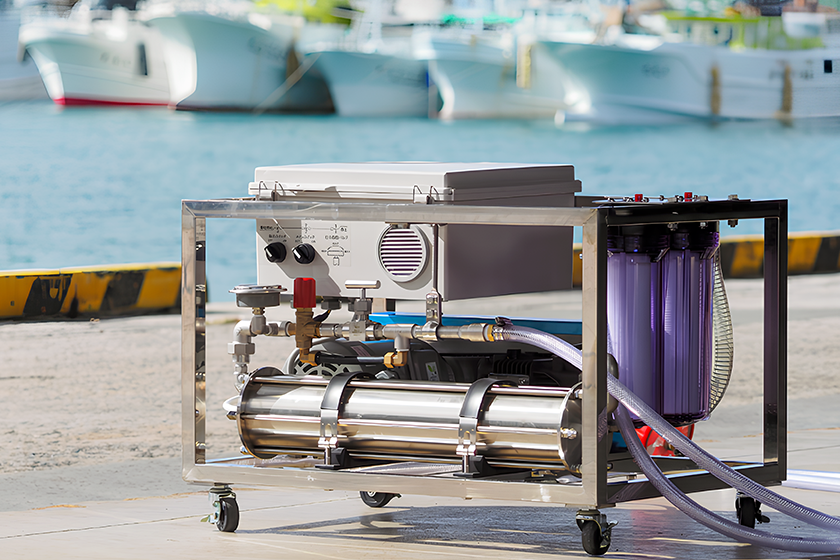
To meet the strong demand to "secure water" in disaster situations, fishing, civil engineering/construction sites, and outdoor activities, we propose our compact and lightweight seawater and river water desalination systems. We have established a system to globally supply these Japan-quality devices through our three ASEAN bases and international partner networks. The Urgent Challenge of "Securing Water" at Disaster, Fishing, and Civil Engineering Sites During fishing and civil engineering/construction operations, or in times of disaster, the supply of domestic and operational water becomes critically tight. Conventional water generation systems are large, heavy, and inefficient, making them unsuitable for on-site operations.Balancing a compact, lightweight design with high water-generation capacity is a key technical challenge.●Situations where the issue surfaces: The need for improvement in existing products; social backgrounds marked by frequent disasters and water resource scarcity.●Main impacts: Suspension of on-site operations, shortage of domestic water at evacuation centers, and operational constraints in fishing and on remote islands. Why Conventional Systems Fail: The Barriers of Bulkiness, Heavy Weight, and Low Efficiency Conventional systems have failed to balance a compact, lightweight design with high water-generation capacity, largely due to constraints in equipment specifications and dimensions.●Specific evidence: Analysis of existing products. Countermeasures Attempted Thus Far and Their Limitations Repurposing general-purpose RO systems (bulky, high power requirements), stockpiling bottled water (temporary, high cost).Based on these limitations, we adopted the following approach as a more radical solution. Solution Approach: Optimizing Membrane, Piping, and Pump Configuration Specs × On-site Verification × Overseas Partner Network Achieving both a compact, lightweight design and high water-generation capacity through the optimization of formulations and specifications (reviewing blending ratios, thickness, and configuration). STEP. 01 Specification Optimization Optimal layout and configuration for membrane, piping, and pump structures STEP. 02 On-site Verification Verifying water generation volume and durability using seawater and river water STEP. 03 Overseas Partnership Supplying to the Africa and Middle East regions through our overseas bases and partner networks Fuji Chemi Trading's Supply & Support System: Japan HQ × ASEAN Bases × Overseas Partnerships This solution is powered by a clear division of roles among multiple bases.・Headquarters / Domestic Sales: Project promotion and primary inquiry desk・Overseas Bases (China, Thailand, Vietnam): ASEAN expansion・Overseas Partner Trading Companies: Supply to the Africa and Middle East regions・Partner Manufacturers: Equipment manufacturing and customization●Supply System: Product manufacturing (Partner Manufacturers) → Local delivery via overseas bases and partnerships. Results and Benefits of Implementation Successfully secured domestic water at sea and on civil engineering/construction sites, achieving improvements in both functionality and performance.●KPI Candidates: Water generation volume / Equipment weight & dimensions / Portability / Power consumption.●Implementation Lead Time: Deployed to on-site operations after repeated prototype evaluations. Anticipated Ripple Effects and Horizontal Expansion The benefits of implementing this solution extend far beyond solving the primary challenge. It can also be utilized as compelling material for internal and executive-level proposals.・Expansion into the disaster BCP market (local governments, evacuation centers, disaster prevention stockpiles)・Horizontal deployment into leisure markets such as outdoors, marine vessels, and motorhomes・Participation in water infrastructure ODA (Official Development Assistance) projects in the Africa and Middle East regions・PR benefits tied to UN SDGs Goal 6 under the theme of "Securing Water" How We Differentiate: Why Fuji Chemi Trading is the Partner of Choice Direct sales from equipment manufacturers often lack strong local expansion capabilities overseas. Fuji Chemi can provide a global supply network that delivers "Japanese Quality × Three ASEAN Bases × African and Middle Eastern Partnerships." Product Information & Specifications Overview The main specifications of our proven products can be selected from multiple grades depending on your application and required conditions. Representative specifications are as follows (please contact us for detailed specifications). ItemDetailsPrimary ApplicationWater generation from seawater, river water, and lake/pond water (Domestic water / Operational water)Target SitesDisaster situations / Fishing / Civil engineering & construction / Commercial facilities / Local governments / Outdoor activitiesSupply BasesChina (Shanghai), Thailand, Vietnam + Overseas Partner Networks (Africa, Middle East, etc.)BasesParallel supply through China (Shanghai), Thailand, and Vietnam basesRelated MarketsDisaster BCP / ODA / Leisure (Marine vessels, motorhomes, etc.)SpecificationsModel number, water generation volume, dimensions, power requirements, etc., are available upon consultation Application Methods & Operational Examples In actual operations, the following patterns are most frequently adopted.・Evaluation Phase: Requirement hearing → Sample evaluation → Specification confirmation・Pre-Mass Production Preparation: Division of roles across bases, specification standardization, and local startup support・Mass Production Phase: Ensuring short lead times and stable supply through our global supply system・Horizontal Expansion: Supporting rollout to other bases and other projects FAQ (Frequently Asked Questions) What types of water quality can the system accommodate? The system can accommodate seawater, river water, and lake/pond water. Please contact us with your specific requirements and conditions. Can the system be implemented by local governments for disaster prevention stockpiling? Yes, we have a proven track record of implementation and welcome consultations for local governments, evacuation centers, and disaster prevention stockpiles. Is it possible to supply products to the Africa and Middle East regions? Yes, we can accommodate this through our partner networks and overseas trading companies. Please also feel free to consult with us regarding participation in ODA projects. Can the system be used on marine vessels and motorhomes? Yes, expansion into leisure applications is fully possible by leveraging the system's excellent portability. Is on-site maintenance and support available locally? We can propose local support in cooperation with our overseas bases and partner networks. Proposals by Related Application and Challenge ■ Thermal Insulation Coating Solution to Reduce Factory Electricity Costs in Thailand | Arranging Local Application Partners | Collaboration Across 3 Bases (China, Thailand, Vietnam)■ Root Zone Water Retention to Counter Drought and High-Temperature Stress | Local Field Demonstration Solution for Biodegradable Superabsorbent Polymer (EF Polymer)■ Mitigating Production Line Stoppage Risks with Local Inventory in Thailand for Automotive Parts | Supplying Molding Resins and Rubber via a BCP Scheme

BCP x 安定供給

タイ拠点

ベトナム拠点

上海拠点

小型海水淡水化装置

環境・省エネ対応

高機能材料 x 新規開発

Multi-sourcing for BCP of Cable Noise Suppression Ferrite Cores | Balancing Equivalent Quality, Stable Supply, and Cost Reduction

Quality variation and supply anxiety due to dependency on a single supplier—by multi-sourcing ferrite cores for cable noise suppression, we achieved a stable supply and cost reduction simultaneously while ensuring equivalent quality. This is a standard scheme in fields where demand is growing due to the EV shift and 5G adoption.This solution is tailored for companies facing challenges in the stable procurement of EMC and noise countermeasure components, such as electric wire manufacturers, air conditioner manufacturers, and automotive equipment manufacturers. Simultaneous Challenges of "Defects/Complaints & BCP" Surface in Cable Noise Countermeasures For cable noise suppression ferrite cores, responding to defects/complaints and addressing BCP (multi-sourcing) were requested simultaneously.Dependency on a single supplier reached its limit in terms of both quality variation and risk.● Situations where it surfaces: The defect and complaint response phase.● Main impacts: Frequent complaints, production line stoppages, and the requirement to balance both quality stability and cost competitiveness. Why Dependency on a Single Supplier is Risky: Quality Variation and Prolonged Lead Times Procurement and supply chain factors (supply anxiety, lead times). Dependency on a single supplier.● Specific evidence/basis: Physical property comparison of existing materials, defect sample verification. Countermeasures Attempted So Far and Their Limitations Requesting quality improvements from the single supplier (reached its limit), and abruptly searching for alternative sources (unstable).Based on these limitations, we adopted the following approach as a more radical and fundamental solution. Solution Approach: Developing New Overseas Manufacturers × Parallel Supply Across 3 Sites × Iterative Prototype Evaluation By developing new products from overseas manufacturers and coordinating across 3 sites, we achieved both equivalent quality and stable supply, while also reducing costs. STEP. 01 Developing Overseas Suppliers Sourced ferrite cores with equivalent physical properties STEP. 02 Multi-Site Coordination Parallel supply across China, Thailand, and Vietnam STEP. 03 Iterative Prototyping and Evaluation Confirmation of equivalent quality Fuji Chemi Trading's Supply Network: Headquarters × Shanghai × Thailand × Vietnam This solution is made possible through the division of roles among multiple sites.・Headquarters / Domestic Sales: Customer window and quality control・Shanghai / Thailand / Vietnam: Supplier coordination, local customs clearance, and inventory● Supply Network: Multi-source supply / Inter-site flexibility / Local delivery. Results of Implementation Eliminated delivery troubles, stabilized quality, and achieved cost reductions.● KPI Candidates: Reduction in number of complaints / Zero delivery delays / Cost reduction.● Implementation Lead Time: Repeating prototypes and evaluations, then transitioning to mass production. Expected Ripple Effects and Horizontal Rollout The effects of implementing this solution extend beyond solving the primary challenge. Please also leverage this as material for internal proposals and presentations to executive management.・Rollout to general EMC countermeasure components (common mode chokes, shielding tapes, gaskets)・Cross-industry expansion from white goods to automotive EMC countermeasures・Perfect fit for the sharp increase in noise countermeasure demand driven by the EV shift・Creation of BCP content under the theme of "breaking away from single-supplier dependency" Difference from Competitors: Why Fuji Chemi Trading is Chosen Domestic independent trading companies tend to lag behind in implementing overseas multi-sourcing. Fuji Chemi can handle parallel procurement across 3 sites in China, Thailand, and Vietnam, lowering costs while ensuring equivalent quality. Product Information & Specification Overview The main specifications of our proven products can be selected from multiple grades depending on the application and requirements. Typical specifications are as follows (please contact us for detailed specifications). ItemSpecificationMain ApplicationFerrite core for cable noise suppression / EMC countermeasure componentsTarget IndustriesElectric wire / Air conditioners / Various equipment (White goods, automotive, etc.)Supply TypeMulti-source supply (Multiple manufacturers, multiple sites)SitesParallel supply across China (Shanghai) / Thailand / Vietnam sitesRelated FieldsCommon mode chokes / Shielding tapes / Gaskets, etc.Rollout ScenariosEV shift / 5G adoption / Automotive EMC countermeasures Utilization Methods & Operational Examples In actual operations, the following patterns are frequently adopted.・Evaluation Phase: Requirement hearing → Sample evaluation → Specification confirmation・Pre-Mass Production Preparation: Division of roles across sites, specification standardization, and local launch・Mass Production Phase: Ensuring short lead times and stable supply through our supply network・Horizontal Rollout: Supporting horizontal rollout to other sites and other projects FAQ (Frequently Asked Questions) How do you ensure quality in multi-sourcing? We ensure equivalent quality by repeating physical property comparisons and prototype evaluations for each manufacturer's product before proceeding with parallel supply. Is it possible to propose general EMC countermeasure components? Yes, we can propose general EMC countermeasure components, including common mode chokes, shielding tapes, and gaskets. Is it possible to expand into the EV and automotive sectors? Yes, we can support the growing demand for noise countermeasures driven by the EV shift. We also have a proven track record in automotive EMC countermeasures. Is it possible to use your services in combination with existing domestic suppliers? Yes, it is possible. By using a dual-sourcing scheme that combines domestic and overseas products, you can also leverage it as a bargaining chip for price negotiations. What is the extent of the cost reduction? Although it depends on the specific project, there are many cases where cost reductions can be expected by strengthening your bargaining power through multi-sourcing. Proposals by Related Application and Challenge ■ Overseas Procurement of PET Film for Power Cables + Domestic Slitting | Cost Reduction with Equivalent Quality Guaranteed■ BCP-Compliant Procurement of FRP Gratings for Industrial Plants | Achieving Mass Production via Overseas Supplier Development and Quality Replication■ Adoption of Chinese-made PI Tape for Heat-Resistant Process Films | Cost Optimization through Just-Spec Specifications

BCP x 安定供給

コストダウン

タイ拠点

ノイズ対策部材

フェライトコア

ベトナム拠点

上海拠点

品質向上 x 歩留まり改善

高機能材料

Reducing Production Line Stoppage Risks with Local Inventory in Thailand for Automotive Parts | Supplying Molding Resin and Rubber via a BCP Scheme

Seeking to minimize production line stoppage risks at local factories in Thailand? By maintaining local inventory of molding resins and rubber at our Thailand base, we significantly reduce supply chain risks associated with overseas production transfer. We roll this out as a standard scheme from a BCP perspective for Tier 1 to Tier 3 automotive parts manufacturers. "Line Stoppage Risks" Becoming Apparent at Thailand Automotive Parts Sites The goal is to achieve a stable supply overseas (Thailand). Production stoppage risks are becoming apparent due to supply chain factors associated with overseas transfer and local production.On-site interviews revealed that raw material supply disruption is the maximum risk.●Scenarios where this becomes apparent: Existing product improvement + overseas local procurement phases.●Main impacts: Extended import lead times, production line stoppage risks, and the demand to balance both function/performance maintenance and delivery times. Why Stoppage Risks Remain: Import Lead Times and Changing Conditions in Overseas Transfer Procurement and supply chain factors (extended lead times, build-to-order products, etc.), and changes in conditions associated with overseas transfer.●Specific Rationale: On-site interviews, actual import lead time records. Measures Tried So Far and Their Limitations Just-in-time importing faces issues such as ocean freight delays. Proposals for local alternative materials failed to achieve the required physical properties.Based on these limitations, we adopted the following approach as a more fundamental solution. Solution Approach: Thailand Local Stock × Global Division of Roles × BCP Buffer Building a local inventory scheme in cooperation with overseas bases. STEP. 01 Local Stock Storing the required quantity at our Thailand base STEP. 02 Global Division of Roles Securing materials stably on the Japan side. Handling local delivery and information gathering at the Thailand base. Fuji Chemi Trading's Supply System: Headquarters × Thailand Base This solution is established through the division of roles across multiple locations.・Headquarters / Domestic Sales: Stable securing of materials.・Thailand Base: Local inventory, local customs clearance, local delivery, and information gathering.・Supply System: Stable supply to the production line via local storage. Results Achieved Through Implementation Improving delivery times and supply stability, ensuring smooth overseas expansion. Significantly mitigating production line stoppage risks.●KPI Candidates: Zero line stoppage incidents / Shortened delivery lead times / Optimized inventory rotation.●Implementation Lead Time: Gradual transition up to the launch of the inventory scheme. Expected Ripple Effects and Horizontal Rollout The effects of implementing this solution extend beyond solving the primary challenge. Please also utilize this as material for internal and management-level proposals.・Proposing local inventory schemes for auxiliary materials other than molding resins (adhesives, release agents, cleaning agents, etc.)・Expanding the same scheme from Thailand to Vietnam, Indonesia, and India・Proposing "Global Inventory Strategy" themes to customer headquarters procurement departments Difference from Competitors: Why Fuji Chemi Trading is Chosen Competitors without a local subsidiary cannot handle customs clearance or local inventory. Fuji Chemi achieves both headquarters quality and local speed through Japanese-speaking sales support and local inventory at our Thailand subsidiary. Product Information & Specification Overview The main specifications of products with a track record of adoption can be selected from multiple grades depending on the application and required conditions. Representative specifications are as follows (please contact us for detailed specifications). ItemSpecificationsPrimary ApplicationMolding resins and rubber for automotive partsInventory BaseThailand Base (Local storage, customs clearance, delivery)BCP BufferSecuring a buffer equivalent to multiple ocean shipmentsTarget CustomersTier 1 to Tier 3 automotive parts manufacturersRollout BasesHorizontal rollout possible to Vietnam, Indonesia, India, etc.Supply FormLocal delivery How to Use & Operational Examples The following patterns are frequently adopted for actual operations.・Evaluation Phase: Requirement hearing → Sample evaluation → Specification finalization・Pre-Mass Production Preparation: Division of roles across locations, specification standardization, and local launch・Mass Production Phase: Ensuring short lead times and stable supply through our supply system・Horizontal Rollout: Supporting expansion to other bases and projects FAQ (Frequently Asked Questions) How is the stock volume determined? We will design the optimal buffer volume together with you, considering estimated production volumes, ocean freight lead times, and demand fluctuations. Can you handle auxiliary materials other than molding resins? All types of auxiliary materials, including adhesives, release agents, and cleaning agents, can be integrated into our local inventory scheme. Can this be rolled out to other ASEAN countries or India? Yes, expanding the exact same scheme to Vietnam, Indonesia, India, etc., is completely possible. Is it possible to implement this under the leadership of our headquarters' procurement department? Yes, we can design a "Global Inventory Strategy" in cooperation with your headquarters' procurement department. How do you handle local customs clearance and legal regulations? Our local subsidiary in Thailand fully manages customs clearance and compliance with local regulations. Proposals by Related Applications and Challenges ■ Local Procurement of Protection Sheets for Product Transportation in Vietnam | Delivering Directly to Lines with Adhesive Tape and Slitting Processing■ BCP-Compliant Procurement of FRP Grating for Plants | Achieving Mass Production via Overseas Supplier Development and Quality Replication

BCP x 安定供給

コストダウン

タイ拠点

成形用樹脂・ゴム

現地在庫サービス

Inquiry form

If you have any comments, questions, or inquiries regarding our products and services, please use the form below.

This site is registered on wpml.org as a development site. Switch to a production site key to remove this banner.